The Hoskins Report Pigs Ate Yankees

The Hoskins Report Pigs Ate Yankees
799 Downloads

DURING THE WAR BETWEEN THE STATES THE YANKEES ATTACKED MY GRANDFATHER’S REGIMENT AT CROSS KEYS. It was wild. Yankee shouts, rebel yells, shells exploding, cannon firing, deadly musket rattle on the left and right, the horizon filled with writhing blue bodies trying to get to you with bayonets.

My grandfather fired, loaded, fired, loaded, fired, and – they were gone. The smoke quietly blew away. The wounded moaned. The dead lay everywhere. A hat raised on a ramrod was instantly torn by minie balls. They were over there. You didn’t stick your head up to look around.

The Yankee generals were proud. They wouldn’t send a trace flag to tend to their wounded and dead.

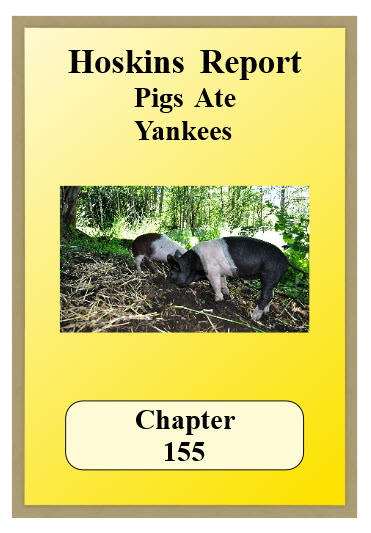
After a time the pigs came. They ate the bodies. They ate the badly wounded, too. At first, a shout or the sudden noise of a shot would melee them scatter. But only at first. They returned and ate until gorged. Nothing would make them stop.

Later, someone offered my great-grandfather some pork. My grandfather was revolted. He replied. “I’ll kill Yankees if I have to, but I’m not going to eat ’em!”

In our family we know better than to eat pig. When you eat pig you eat a scavenger. When you eat a scavenger you eat what that scavenger has eaten.

The Pig

Swine are to the animal world what the turkey buzzard is to the bird world. They do the job they were created to do. No rotten carcass, stinking offal, or rancid garbage remains where pigs root.
The Early Church in Ireland

The Early Church in Ireland
700 Downloads

IN THE ARTICLE “THE EARLY CHURCH IN BRITAIN” OF 30 SEPTEMBER 1992, on pages 6 and 7, the author referred to the report by Frederick Haberman, (Ref 1 p. 141), which tells of the twenty ninth chapter of Acts which is in the Turkish Archives at Istanbul.

Several paragraphs from the twenty ninth chapter of Acts give indications that St. Paul went to Britain. These are quoted below for conveniences:-

“And Paul, full of the blessings of Christ, and abounding in the Spirit, departed out of Rome, determining to go into Spain; for he had a long time purposed to journey thitherwards, and he was minded to go from thence into Britain. For he had heard in Phoenicia that certain of the children of Israel, about the time of the Assyrian captivity, had escaped by sea to the “isles afar off” as spoken by the prophet, and called by the Romans Britain”.

“And they departed out of Spain, and Paul and his company finding a ship in Armorica sailing into Britain, they went therein and passing along the south coast, they reached a port called Raphinus”.

“And on the morrow he came and stood on Mount Lud; and the people thronged at the gate, and assembled in the Broadway, and he preached Christ unto them,and many believed the word and the testimony of Jesus Christ”.

The Hoskins Report – Saxon Identity

The Hoskins Report – Saxon Identity
694 Downloads

Fireside Chat

“Grandma, Why do you always study your ancestors?”

“To find out what our rights are, son,” she replied. “What rights?”
“Well, let me try to explain. We have rights guaranteed by the Constitution. They were guaranteed to our grandfathers and to their descendants forever. If someone took away our rights, we might get them back some day if the old rulers return to power.”
“That’s the way it was in Scotland and England. Rights and possessions were given to our ancestors and their descendants forever. We are the descendants. Our ancestor lost his possessions when a new king came to power. If a descendant of the old king comes back into power we might get our possessions back again.”
“Grandma, I don’t understand.”
“That’s all right, son. One day you will.”

Enfiefment

THOSE WORDS WERE SPOKEN LONG AGO. Now, I’m pushing seventy, and for the first time I’m beginning to understand “enfiefment.”


Peter I and The Azov Fleet

Peter I and The Azov Fleet
607 Downloads

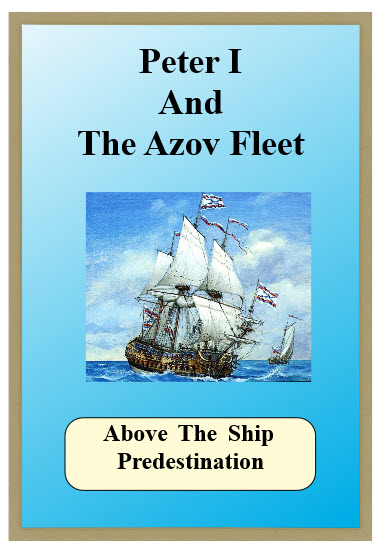
FIVE YEARS BEFORE PETER I BECAME TSAR, Russia had formed an alliance with the German Empire, Rzech Pospolita (the Kingdom of Greater Poland), and the City-State of Venice in order to oppose the Ottoman Turks. In 1695, during his first campaign against the Turks, Peter I quickly realized that Russia’s free access into the Black Sea and Sea of Azov was not possible so long as the Turks held the Fortress of Azov.

In a protracted and ultimately disastrous attempt to capture Azov, the Russian forces were defeated: Azov was both well fortified and protected by the Turkish fleet. It now further became apparent that wresting Azov from the Turks depended upon the creation of a Russian naval fleet.

Consequently, at the Preobra-zhenskoye and Voronezh shipyards, construction of a fleet of ships was undertaken in earnest in 1696. The shipbuilding proceeded quickly, and by the spring of that same year two warships, 24 galleys, four fire ships and over 1,400 smaller boats had been constructed and were ready for launching.

Stolen Birthrights Jacob, Esau, and Healing The Politics of Revenge

Stolen Birthrights Jacob, Esau, and Healing The Politics of Revenge
715 Downloads

Publisher’s Note: Obviously the author of this article sees the Jews as being Israel, and not Edomites themselves, but nevertheless contains some useful information.

THE CONFLICT BETWEEN THE ISRAELIS AND THE PALESTINIANS is similar in many ways to that between the United States and Latin America. Is there a connection?

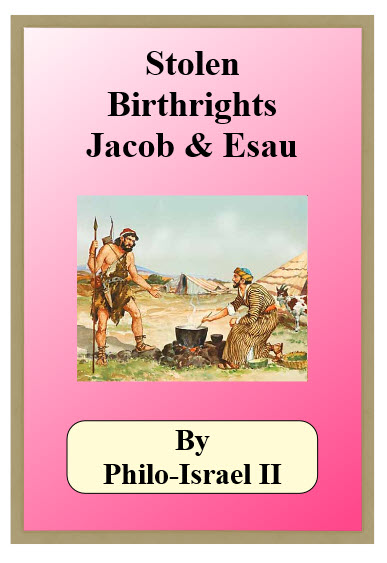
As Israel has spread among the nations, so has Edom. Prophecy says that a time would come, when Jacob’s sins would allow Esau to revolt against him [Gen 28.39-41]. Esau would inhabit some of the drier areas of the earth, be dominated by Jacob, have a bitter vendetta against him, and eventually throw off Anglo-Saxon/Israeli rule.

US-Latin American relations reads like a Jacob and Esau story. Esau was the red-skinned macho man, a warrior and a hunter. He would give you the shirt off his back but if you crossed him, he would likely kill you. Jacob was the Anglo, easy-going, money-minded, but ready to rip you off. Even though God intended Jacob to get the birthright, Jacob went out and stole it and Esau’s descendants have never forgiven him.

Evangelicals Who Serve The Anti-Christ

Evangelicals Who Serve The Anti-Christ
667 Downloads

I AM A CHRISTIAN. I MUST ALSO STATE THAT I AM TOLERANT OF OTHER RELIGIOUS BELIEFS, and I am committed to the right of people to have and practice whatever religious belief they so choose. Freedom of thought, conscience, belief and speech is fundamental to traditional European communities. I oppose religious intolerance, just as I oppose political tyranny and the suffocating encroachment of world government. Although Europe has suffered from times of political and religious oppression, Western civilization from its classical roots in Greece and Rome to modern Europe has been the most ardent defender of freedom of thought and conscience. It is no accident that the most isolated pocket of ancient Europeans, Iceland, has the longest standing parliament in the world.
I seldom delve into religious matters, as I don’t have the honour of being a pastor or priest. However, policies of the Christian churches are critical to the well-being of European Americans as the overwhelming majority of Europeans are Christian as I am. Organized Christian churches have dramatic influence on our society, especially in America. On some matters, I feel I must speak out both as a Christian and as a European American.

Notes on Stonehenge

Notes on Stonehenge
654 Downloads

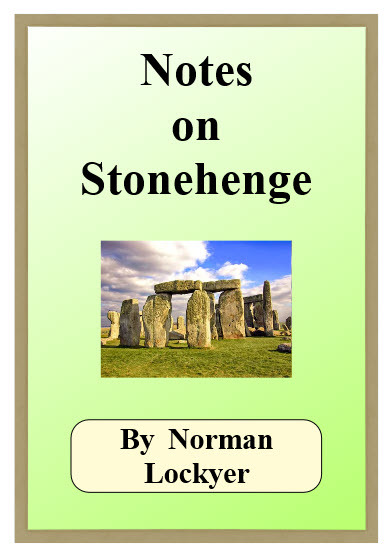
IN MY LAST NOTES I REFERRED TO THE STAR OBSERVATIONS WHICH MIGHT BE MADE BY MEANS OF STONE CIRCLES.

I now pass to solar observations.

I have already pointed out that much time has been lost in the investigation of our stone circles, for the reason that in many cases the exact relations of the monuments to the chief points of the horizon, and therefore to the place of sunrise at different times of the year, have not been considered; and when they were, the observations were made only with reference to the magnetic north, which is different at different places, and besides is always varying; few indeed have tried to get at the real astronomical conditions of the problem.

The first, I think, was Mr. Jonathan Otley, who in 1849 showed the “orientation” of the Keswick circle “according to the solar meridian,” giving true solar bearings throughout the year.

I wrote a good deal in Nature[2] on sun and star temples in 1891, and Mr. Lewis the next year expressed the opinion that the British stone monuments, or some of them, were sun and star temples.

Mr. Magnus Spence, of Deerness, in Orkney, published a pamphlet, “Standing Stones and Maeshowe of Stenness[3],” in 1894; it is a reprint of an article in the Scottish Review, October, 1893. Mr. Cursiter, F.S.A., of Kirkwall, in a letter to me dated March 15, 1894, a letter suggested by my “Dawn of Astronomy,” which appeared in that year, and in which the articles which had been published in Nature in 1891 had been expanded, directed my attention to the pamphlet; the observations had no pretension to scientific accuracy, and some of the alignments are wrongly stated, but a possible solar connection was pointed out.

I began the consideration of the Stenness circles and alignments in 1901, but other pressing calls on my time then caused me to break off the inquiry. Quite recently it occurred to me that a complete study of the Stenness circles might throw light on the question of an earlier Stonehenge, so I have gone over the old papers, plotting the results on the Ordnance map.

Laodicea on the Lycus

Laodicea on the Lycus
670 Downloads

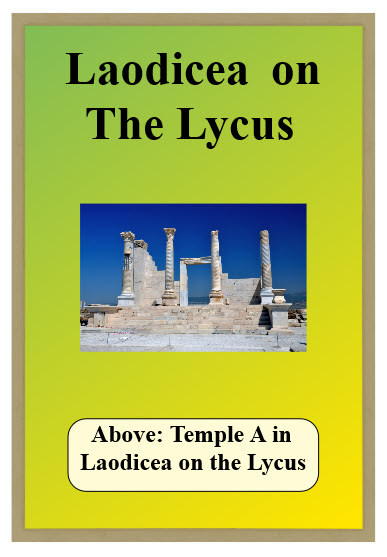
LAODICEA ON THE LYCUS, LOCATED AT THE CROSSROADS OF IMPORTANT TRADE ROUTES, WAS ONCE A PROSPEROUS CITY, famous for its black wool, banking services, and medical achievements. In the times of late antiquity, it had a large Jewish community and a significant congregation of Christians. St. John mentioned Laodicea as one of the Seven Churches of Asia in the Book of Revelation

Geography

Laodicea is situated on a hill between fertile valleys irrigated by the waters of Asopus (tr. Gümüşçay) and Kapros (tr. Başlıçay) streams. They are the tributaries of the Lycus River, now known as Çürüksu Çayı, which flows on the north-eastern side of the hill. This river gave Laodicea its cognomen – ad Lycum – meaning in the River Lycus. It distinguishes this city from other Laodiceas founded by Antiochus II.

Laodicea was founded on an important trade route, leading to this city from Sardis through Philadelphia. In its neighbourhood, there are many important ancient cities. Just 10 km to the north of Laodicea, there is the famous Roman spa of Hierapolis. Colossae, known from the Epistle to the Colossians written by St. Paul, is 14.5 km to the east. The city of Tripolis on the Meander is located on the road to Sardis, 26 km to the north-west of Laodicea.

.

The Early Church in Britain

The Early Church in Britain
729 Downloads

1. The Church of Arimathea and its Roman offshoot

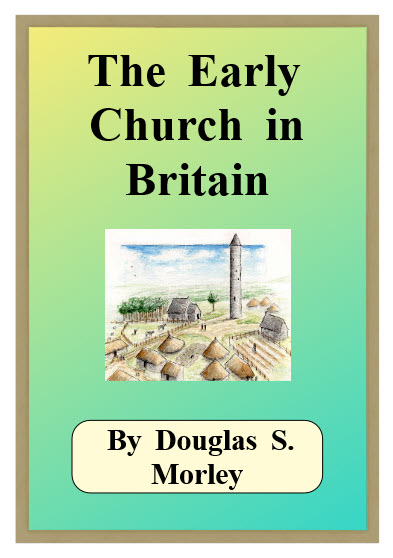
JULIUS CAESAR RAIDED BRITAIN IN BC 55 AND BC 54 and then the Islanders were left in peace by the Romans until they came again in AD 43 during the reign of Emperor Claudius, . th is time to conquer Britain.

Joseph of Arimathea arrived in Marseilles about AD 35 with Lazarus, Mary, Magdalene, Martha, her handmaiden Marcella and Maximin, a disciple. From there they travelled to Britain where Joseph preached the Gospel.

The Bible gives us the following information about Joseph of Arimathea. He was a rich man, a disciple of Jesus but secretly for fear of the Jews, a good man and righteous person , a respected member of the Jewish Council (Sanhedrin) who had not consented to the purpose and deed of the Council in condemning Jesus to death. He went to Pilate secretly after the death of Jesus and asked that he might take the body of Jesus. Pilate gave him leave to do this. With the help of Nicodemus, who brought a mixture of myrrh and aloes, they took the body of Jesus and bound it in cloths with the spices, as was the burial custom of the Jews. The body was placed in the unused tomb of Joseph of Arimathea. The Talmud confirms the eastern tradition that Joseph was the uncle of Mary, the mother of Jesus.(Ref 12).

According to Whitehead (Ref 6), Cornish tradition states that Joseph of Arimathea was a wealthy tin merchant shipping tin from the Isles while a resident of Judea.

Lazarus, whom Jesus raised from the dead, his sister Mary, who wiped the feet of Jesus with ointment and her hair, and their sister Martha, were loved by Jesus.

A Short History of Our English Bible

A Short History of Our English Bible
581 Downloads

Early Church History and The English Bible

BEFORE THE END OF THE SECOND CENTURY AD the gospel was brought to London, England. There might have been early translations of portions of the Greek New Testament into English. None are extant[1]. It remained for missionaries from Rome in the fifth century to bring Jerome’s Latin Vulgate to England[2]. The need was great for an English translation of the Bible[3].

Medieval Church History and The English Bible

An intelligible liturgy that both priest and laity could understand gave an impetus for the paraphrasing of Scripture into the English language. Foremost of the portions of the Bible paraphrased became the Psalms, sometimes with meter[4]. Caedmon, (a seventh century monk) made a metrical version of some portions of Scripture. Bede translated the Gospels into English.

It is alleged that he finished translating the Gospel of John on his deathbed in A.D. 735. Alfred the Great (reigned 871-899) translated the Psalms and the Ten Commandments[5]. Some interlinear translations remain from the tenth century[6]. The Lindisfarne Gospels are cited as the most famous of this period (ca. 950)[7].

Aelfric (ca. 955-1020) made idiomatic translations of Scripture portions. Two of these exist until today. Almost three hundred years later, William of Shoreham and Richard Rolle each translated the Psalter. Rolle’s work included a verse by verse commentary. Both Psalters were popular at the time of John Wycliffe (ca. 1329-1384)[8].